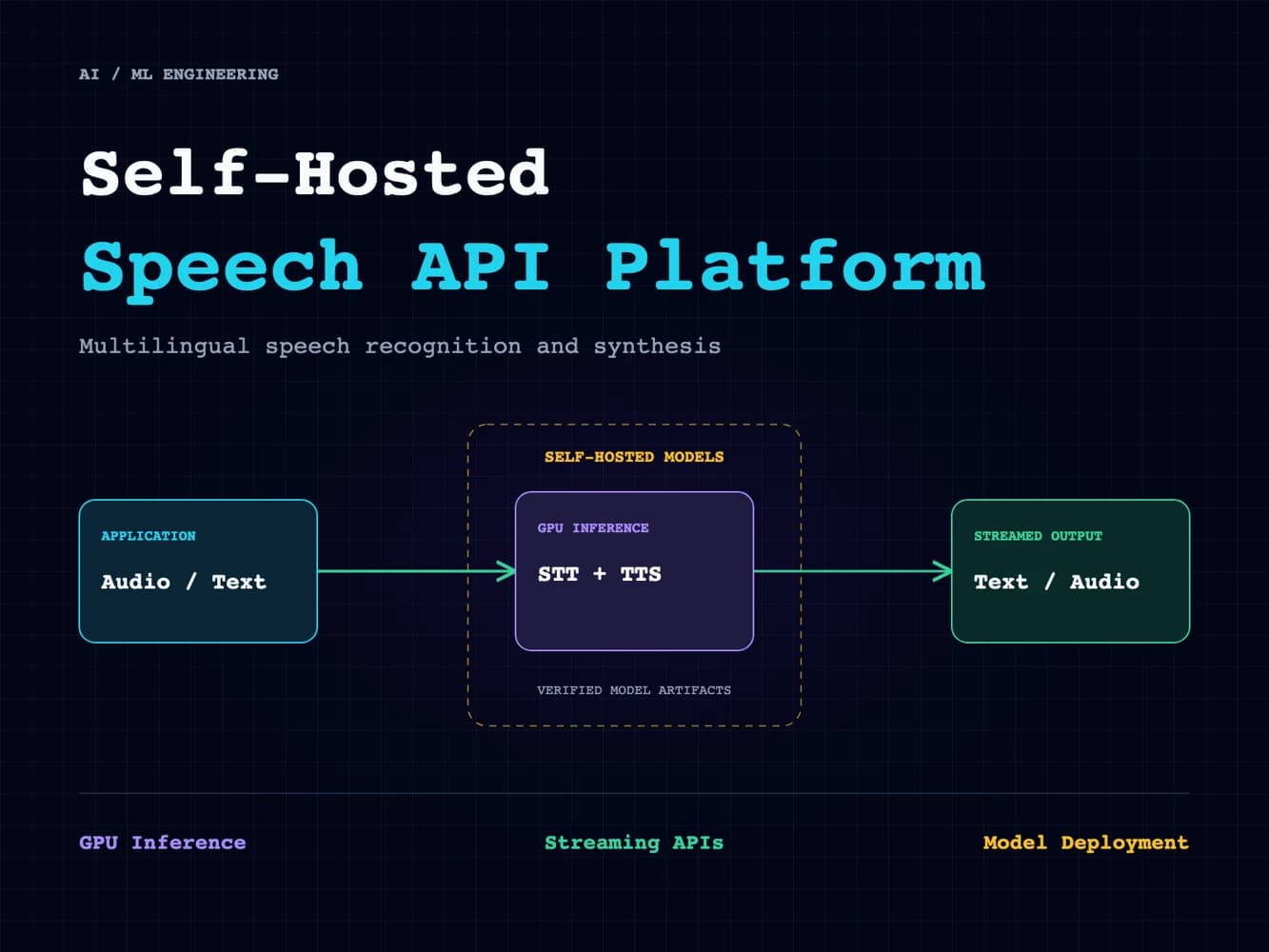
Batched speech recognition, streaming synthesis and scale-to-zero GPU serving with authenticated APIs.
Project overview
The problem
Speech recognition and synthesis models need a serving layer that can handle concurrent requests, stream output and account for GPU resources. Application teams also need stable API boundaries, authentication and usage records.
My contribution
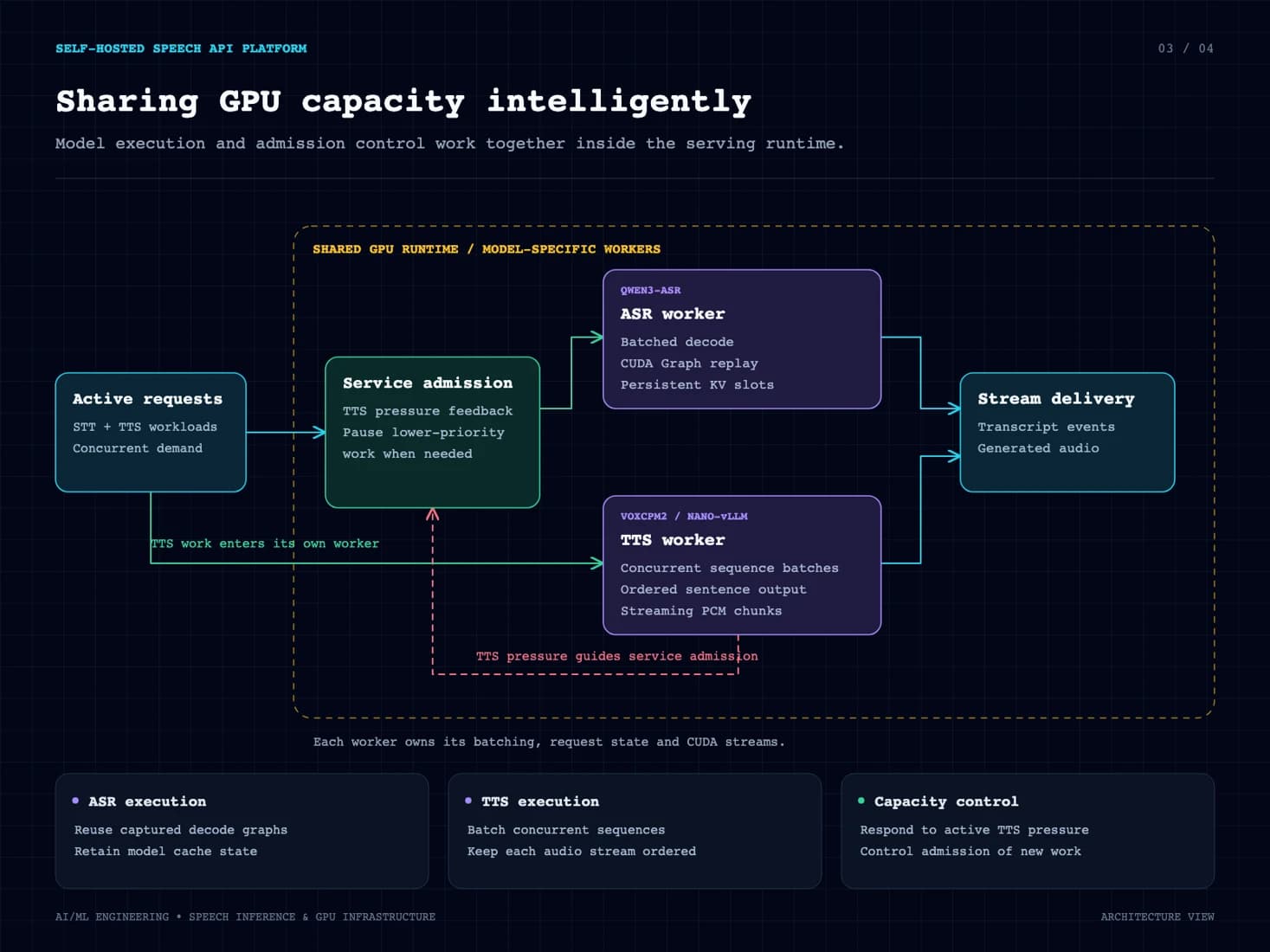
I engineered a self-hosted multilingual speech API platform using Python, PyTorch, Qwen3-ASR, VoxCPM2 and Modal GPUs. The ASR path uses batched decoding, CUDA Graph replay and persistent KV-cache slots. The TTS path integrates Nano-vLLM-backed concurrent sequence batching with streaming audio output.
I implemented GPU admission control, request cancellation, authenticated STT/TTS endpoints and usage metering. Verified model artifacts were deployed on scale-to-zero GPU infrastructure for application integration.
What the system delivers
The platform exposes recognition and synthesis through controlled API endpoints while managing the lifecycle of the underlying GPU work. This case documents the Qwen3-ASR and VoxCPM2 serving implementation. The broader Swarit product case covers additional model-development and application work.
Architecture
Explore related work
See real-time voice AI or explore my GPU inference services. For a similar project, tell me what you need to build.